Short answer: start at 16 to 24 colors for a photo. In our test, the two drawings needed only 10 to 20, while real photos kept improving for longer: by 24 colors, the dog and sunset photos had made 87 % and 85 % of the gain they reached at about 50. Small details can still need more, so check the preview.
The test
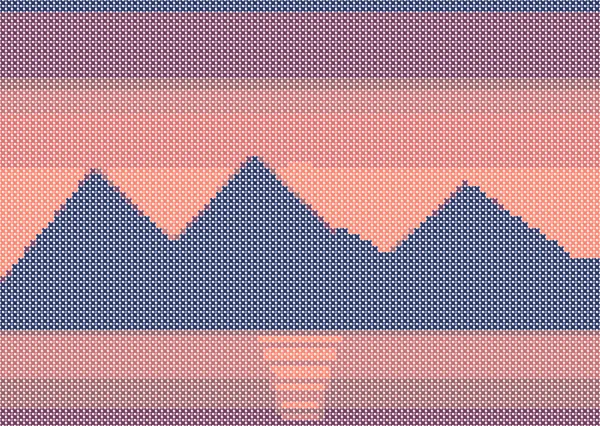
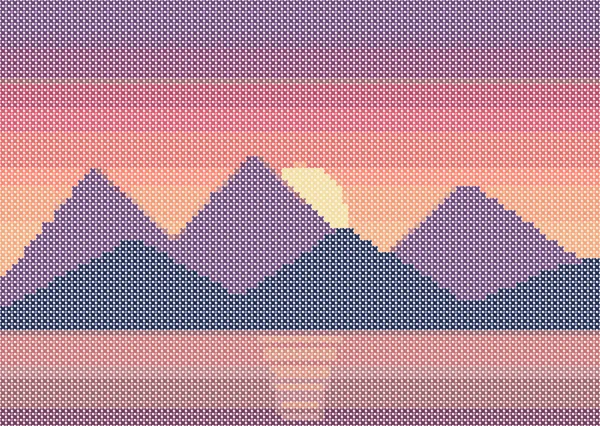
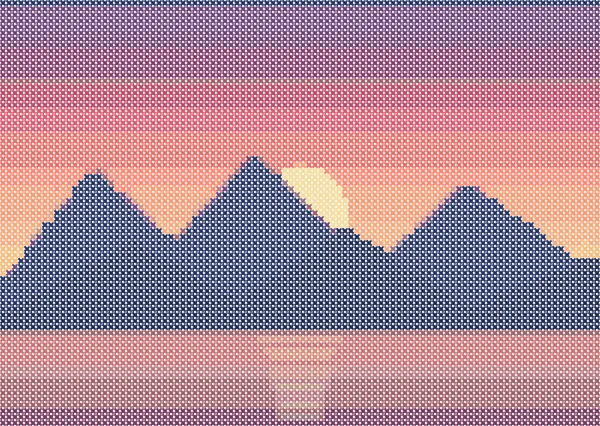
We started with the two sample pictures in our pattern maker: a sunflower with flat areas of color at 80 stitches wide, and a sunset with long gradients at 100 stitches wide. Both are drawn illustrations, so they are cleaner than a phone photo, and we repeated the test on real photos below. Every run used DMC thread and had Remove stray single stitches turned on.
For each chart we measured three things:
- Color error: the average CIEDE2000 color difference between each square of the shrunken picture and the thread chosen for it. Lower is closer. Around 1 to 2 is about the smallest difference people notice side by side.
- Single stitches: squares with no neighbor of the same color, the "confetti" that slows stitching down.
- Thread runs per row: how many separate stretches of color an average row contains.
Results: the sunflower, flat colors
| Colors asked for | Colors in the chart | Color error | Single stitches | Thread runs per row |
|---|---|---|---|---|
| 6 | 6 | 6.34 | 22 | 5.6 |
| 10 | 10 | 3.36 | 104 | 9.0 |
| 16 | 15 | 3.29 | 91 | 8.9 |
| 24 | 14 | 3.35 | 85 | 8.9 |
| 36 | 15 | 3.33 | 85 | 9.0 |
| 50 | 16 | 3.33 | 79 | 8.9 |
Going from 6 to 10 colors cut the error from 6.34 to 3.36. Going from 10 to 16 barely moved it, to 3.33. Asking for 50 colors gave only 16, because this picture does not contain 50 different colors.
Results: the sunset, smooth gradients
| Colors asked for | Colors in the chart | Color error | Single stitches | Thread runs per row |
|---|---|---|---|---|
| 6 | 6 | 6.67 | 56 | 3.4 |
| 10 | 10 | 5.91 | 26 | 3.6 |
| 16 | 16 | 5.07 | 48 | 4.2 |
| 24 | 21 | 4.67 | 81 | 4.8 |
| 36 | 21 | 4.69 | 74 | 4.7 |
| 50 | 21 | 5.06 | 45 | 4.3 |
The gradient kept improving for longer, from 6.67 at 6 colors to 4.67 at 21. It stopped at 21 even when we asked for 50, and the error stopped falling too.
Results: four real photos
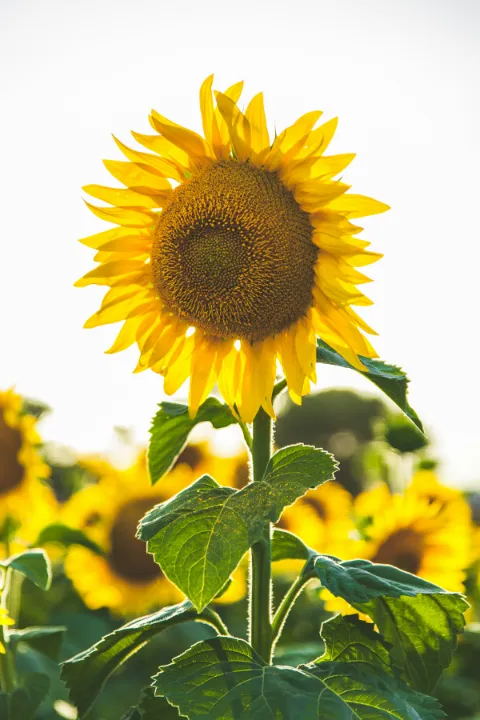
Drawings are tidy, so we ran the same test on four free photos: a sunflower and a sunset to compare with the drawings, a dog, and a cat on a black background. The widths were the same, 80 stitches, or 100 for the sunset.
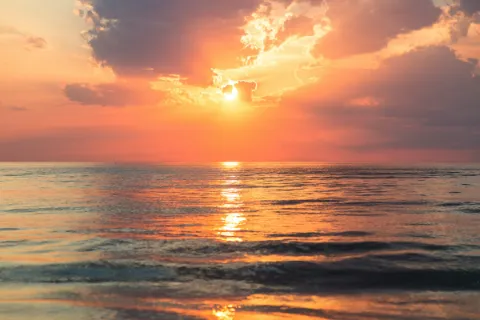
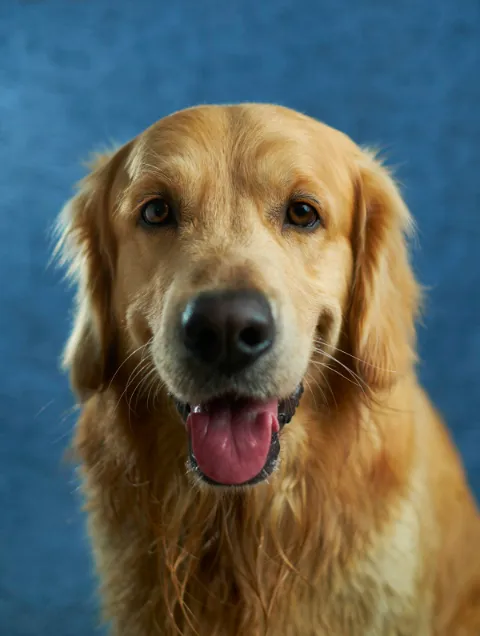
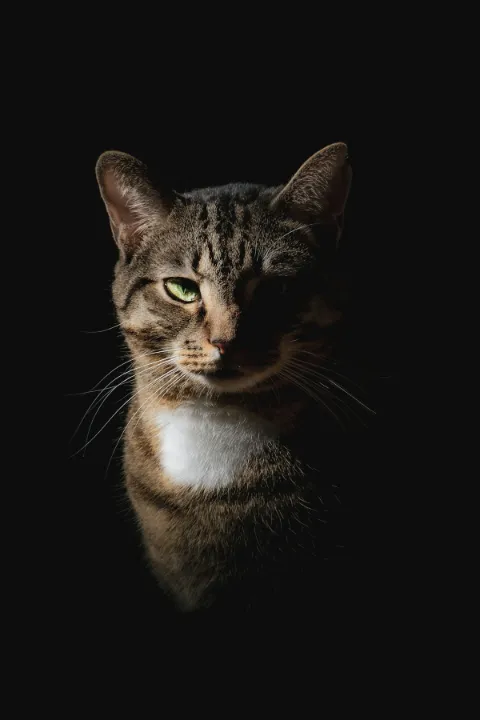
| Colors asked for | Sunflower | Sunset | Dog | Cat |
|---|---|---|---|---|
| 6 | 6.43 | 8.47 | 7.05 | 3.24 |
| 10 | 5.23 | 6.64 | 5.83 | 3.11 |
| 16 | 4.43 | 5.96 | 5.26 | 3.01 |
| 24 | 4.23 | 5.36 | 4.60 | 3.05 |
| 36 | 4.26 | 4.99 | 4.32 | 3.05 |
| 50 | 4.33 | 4.80 | 4.22 | 3.07 |
| Colors used when asked for 50 | 44 | 48 | 48 | 23 |
The figures are the color error, where lower is closer.
- Photos use far more thread colors. Asked for 50, the sunflower photo got 44, and the sunset and the dog each got 48. The drawn sunflower and sunset stopped at 16 and 21.
- The point where more colors stop helping depends on the photo. The sunflower photo was at its best at 24 colors (4.23) and got no better after that. The sunset was still improving at 48 (4.80).
- A black background flatters the score. The cat's error looks low because all that easy black is counted in the average, and it only used 23 colors. Judge a picture like this by eye.
- Every extra color has a cost. The dog went from 14.1 runs of thread per row at 6 colors to 31.9 at 48, and from 43 single stitches to 287.
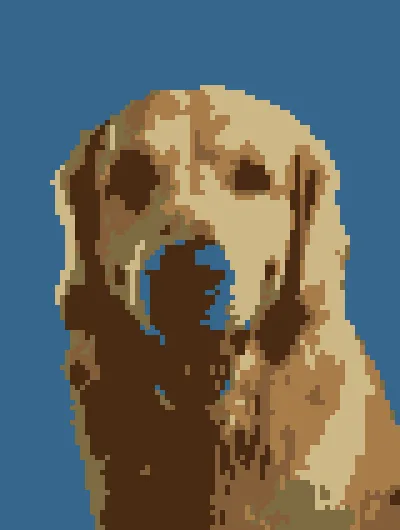
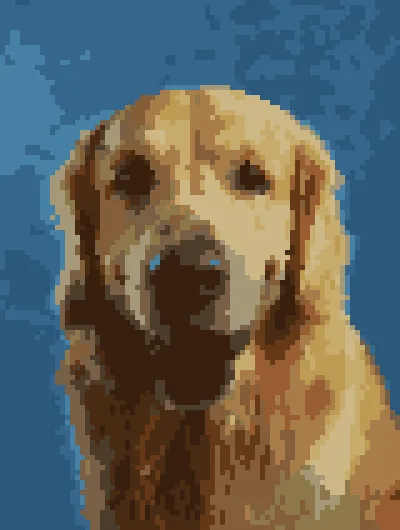
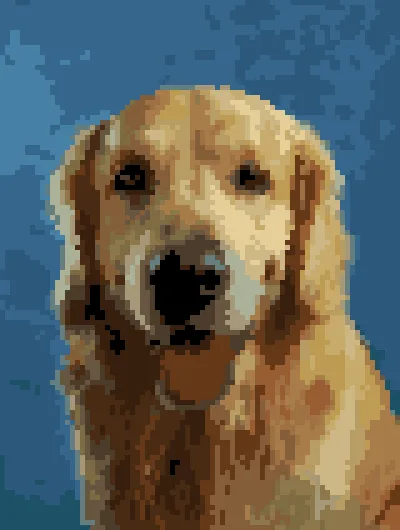
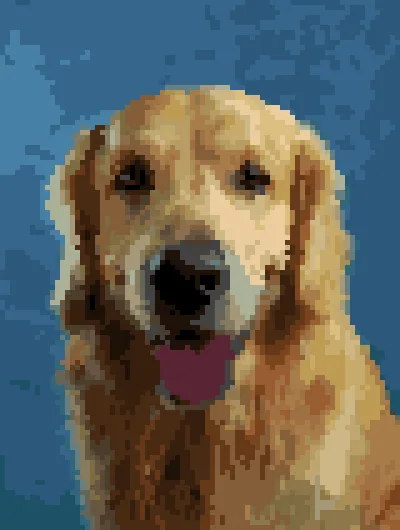
The dog shows why the average does not tell the whole story. The tongue is a small part of the photo, so the chart had no pink thread at 24 colors and had one at 36. If one small color matters to you, raise the setting until it appears in the preview.
Why you can get fewer colors than you asked for
The maker groups similar colors, then matches each group to the nearest DMC thread. Two groups often land on the same thread. Then the clean-up merges any color covering less than 0.15 % of the chart into its nearest neighbor, because buying a skein for a few stitches is rarely worth it. So treat the color setting as a limit, not a target.
What the clean-up and dithering do
We also ran both pictures at 24 colors with the clean-up off, on, and with Smooth gradients (dithering):
| Picture and setting | Colors | Color error | Single stitches | Runs per row |
|---|---|---|---|---|
| Sunflower, clean-up off | 22 | 3.06 | 291 | 11.6 |
| Sunflower, clean-up on | 14 | 3.36 | 85 | 8.9 |
| Sunflower, dithering | 22 | 3.58 | 1,553 | 40.5 |
| Sunset, clean-up off | 24 | 4.57 | 142 | 5.6 |
| Sunset, clean-up on | 21 | 4.67 | 81 | 4.8 |
| Sunset, dithering | 24 | 5.13 | 2,263 | 63.2 |
| Dog photo, clean-up off | 24 | 4.4 | 515 | 32 |
| Dog photo, clean-up on | 24 | 4.6 | 223 | 29.3 |
| Dog photo, dithering | 24 | 4.71 | 1,367 | 43.4 |
| Sunset photo, clean-up off | 24 | 5.21 | 325 | 24.1 |
| Sunset photo, clean-up on | 24 | 5.36 | 96 | 20.7 |
| Sunset photo, dithering | 24 | 5.8 | 1,669 | 55.4 |
The clean-up removed 71 % of the sunflower's single stitches and only raised its color error from 3.06 to 3.36, a trade most stitchers will take. Dithering went the other way: the sunset jumped to 63.2 runs of thread per row. It can look smoother from a distance, but it means a thread change every couple of stitches, so keep it for small areas or for people who enjoy that kind of work.
The photos behaved the same way. The clean-up removed 57 % of the dog's single stitches and 70 % of the sunset's, and dithering took the sunset photo to 55.4 runs per row.
What to pick
- Logos, cartoons, flat drawings: start at 8 to 12. More colors will not show.
- Pets, flowers, most photos: start at 16 to 24 and look at the preview. Go higher if a small color you care about is missing.
- Skies and soft backgrounds: try 30 or more. Our sunset photo was still improving near 50.
- Portraits: we did not test photos of people, so start at 24 or more and judge by eye.
Change the setting a few steps either way and compare the preview. If two previews look the same, keep the one with fewer colors: fewer skeins to buy and fewer thread changes. See also what size to make your pattern.