Short answer: 60 to 80 stitches wide is a good first photo project. It is enough for a clear subject and takes roughly 18 to 64 hours for a square picture, or 24 to 85 for the taller dog photo below. Going to 160 stitches sharpens the detail but needs four times as many stitches as 80.
The same picture at six widths
We charted one sample sunflower with our pattern maker, always asking for 20 DMC colors with stray stitches removed. The hours assume 100 to 200 stitches an hour (where that comes from).
| Stitches | Total | Width on 14-count | Width on 18-count | Time | Runs per row |
|---|---|---|---|---|---|
| 25 × 25 | 625 | 1.8 in | 1.4 in | 3 h to 6 h | 6.9 |
| 40 × 40 | 1,600 | 2.9 in | 2.2 in | 8 h to 16 h | 6.6 |
| 60 × 60 | 3,600 | 4.3 in | 3.3 in | 18 h to 36 h | 7.4 |
| 80 × 80 | 6,400 | 5.7 in | 4.4 in | 32 h to 64 h | 9.0 |
| 120 × 120 | 14,400 | 8.6 in | 6.7 in | 72 h to 144 h | 11.9 |
| 160 × 160 | 25,600 | 11.4 in | 8.9 in | 128 h to 256 h | 12.1 |
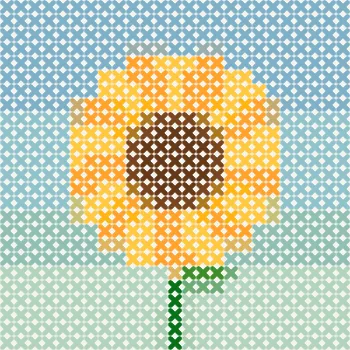
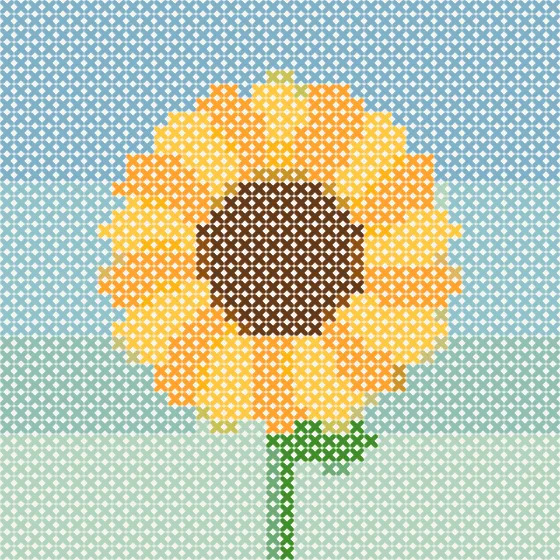
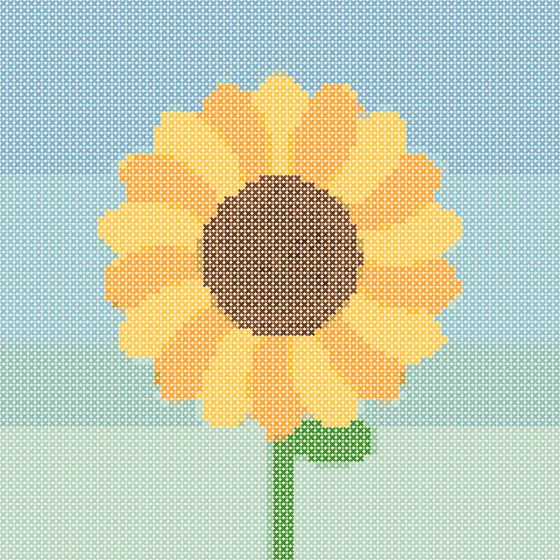
What the numbers show
- Work grows with the square of the width. Twice as wide is four times the stitches, so 60 wide (3,600) to 120 wide (14,400) is the jump from a few weekends to months of evenings for many stitchers.
- Rows get busier too. An average row went from 6.9 runs of thread at 25 stitches to 12.1 at 160, because the chart can now show smaller details.
- Fabric count changes the size, not the work. The same 80-stitch chart is 5.7 in on 14-count and 4.4 in on 18-count, with the same number of stitches. See the Aida count guide.
The same test on a real photo
We repeated this on a photo of a dog, again asking for 20 colors. Photo by Victor G on Unsplash. The photo is taller than the drawing, so each width has more stitches.
| Stitches | Total | Width on 14-count | Time | Runs per row |
|---|---|---|---|---|
| 25 × 33 | 825 | 1.8 in | 4 h to 8 h | 11.8 |
| 40 × 53 | 2,120 | 2.9 in | 11 h to 21 h | 17.4 |
| 60 × 80 | 4,800 | 4.3 in | 24 h to 48 h | 22.0 |
| 80 × 106 | 8,480 | 5.7 in | 42 h to 85 h | 27.2 |
| 120 × 159 | 19,080 | 8.6 in | 95 h to 191 h | 34.6 |
| 160 × 212 | 33,920 | 11.4 in | 170 h to 339 h | 40.3 |
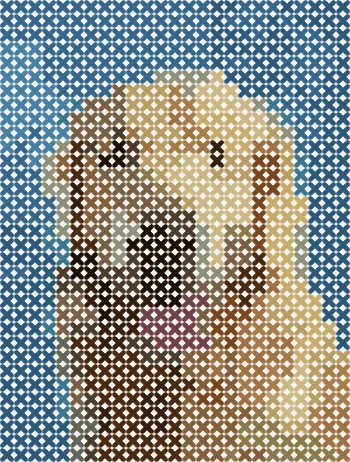
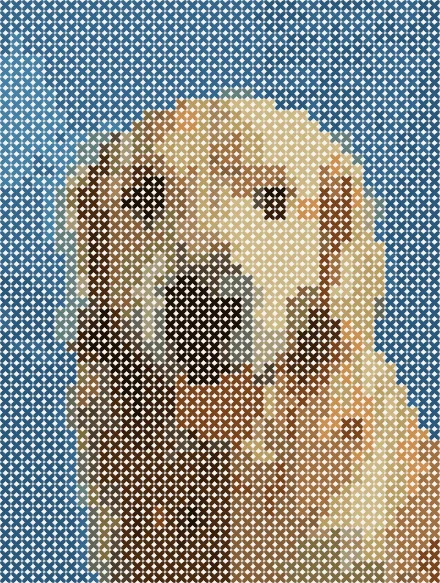
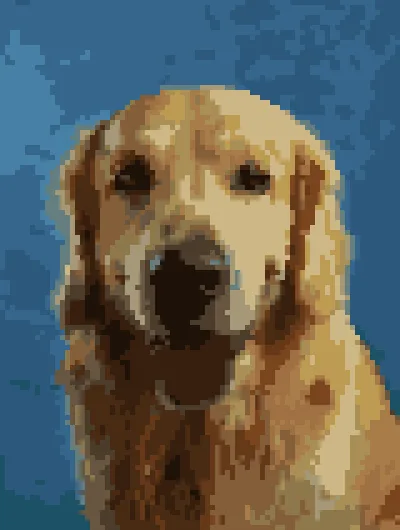
The big difference from the drawing is how busy the rows get. At 160 stitches wide, an average row had 40.3 runs of thread on the photo, against 12.1 on the drawing. Fur and soft shadows add color changes everywhere, so expect a photo to go more slowly than a drawing with the same stitch count.
Pick the size from the smallest thing that matters
Find the smallest detail you need to recognize, such as a pet's eye, and work out how many stitches it gets. If a face takes up half of your picture, a 60-stitch chart gives it 30 stitches, and each eye will be two or three stitches at most. That is usually the point where a face stops looking like a particular person or animal.
- Under 40 stitches: simple shapes, ornaments, cards. The free patterns on this site are mostly this size or a little larger.
- 60 to 80 stitches: one clear subject, such as a pet or a flower.
- 120 stitches and up: portraits and landscapes, if you are happy with a long project.
Leave room around the design
Add at least 3 in of spare fabric on every side for a hoop and for framing. An 80-stitch design on 14-count is 5.7 in wide, so cut about 12 in of fabric. Then decide on colors with our test of 6 to 50 colors.